Friday, May 25, 2012

Imperfectly Organic


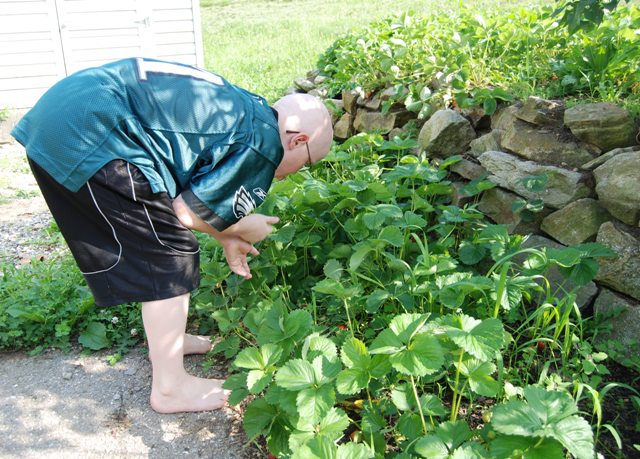
“Even the yucky ones taste great!” my youngest child called to me as we stooped in the strawberry garden, me picking and him feasting. When he says “yucky” he means not perfectly red and strawberry shaped like the ones you buy in the grocery store. That’s the thing about organic fruit, and home-grown organic fruit in particular, sometimes it doesn’t look pretty.

It’s very tempting to go for the perfect fruit over the funny looking fruit with a few bad spots. But nine times out of ten, perfect fruit has been grown with pesticide, harvested before it’s time, gassed to make it finish ripening, and then sprayed with preservative. And you can taste the difference.

My children have gotten spoiled. They don’t even want to eat the strawberries from the market that are conventionally grown somewhere far, far away. They know they don’t taste like strawberries, just the idea of strawberries. But they sure look pretty.

Same is true for other fruit. We shopped at Trader Joes today and I told my 9 year old he could “spend” $20 on the stuff he wanted. When we met up at the check-out, I was impressed with his choices of organic fruit and yogurt, and not at all surprised to see the rest of his loot come from the snack aisle.

“The organic raspberries were 60 cents more than the other kind!” he remarked. “Why would you buy the other kind?” He knows of what he speaks. The “other kind” taste like the memory of raspberries. On the drive home, we feasted, savoring the fresh sweet-tart taste of real raspberries and wishing that ours would ripen faster.

So, the next time you find yourself standing in the fruit aisle of the grocery store wondering if it’s really worth the extra 50 cents or more a pound – take it from my youngest child – why would anyone buy the “other kind”? If not for your health, than for your tastebuds. This is the only body you’ll be getting in this lifetime so take care what you put in it. Life is too short to eat chemically created strawberries!

Monday, May 14, 2012

Stop Junk Mail


What would happen if you accepted all those credit card offers that come in the mail on an almost daily basis? Might be an interesting experiment, but it could easily get out of hand. And what about the insurance offers? Refinancing your mortgage?

I’m assuming that these come-ons must work or companies wouldn’t keep mailing them out, right? It’s discouraging when you think of the sacrifice of paper, energy, and resources. Normally I tear the offers in two and throw one half in the recycling and one half in the trash. And then I worry that some creative thief will figure out my system and start pairing up my trash and recycling and steal my credit/identity/money. I’m sure no one’s this resourceful, no matter how desperate. My worries are simply a result of the paranoid mindset that overcomes you when you read far-fetched stories on Facebook.

Alas, I have solved this problem and don’t stress sorting the mail, what there is of it now that I no longer get all these lovely offers. How did I do it?

OptOutPrescreen.com is the official Consumer Credit Reporting Industry website to accept and process requests from consumers to Opt-out or Opt-in of firm offers of credit and insurance.

It’s fairly simple to get your name off the books. You can choose to do so online and it’s good for five years, but you can also print out the forms and sign them, mail them back and have your name removed PERMANENTLY. Pretty cool, huh? I had no idea that one agency could control the mass of mailings that have littered my life.

I do remember passing by this site years ago, but I didn’t believe it would really stop all of the offers, so I never took the time to print out and mail in the request. About six weeks ago I finally did and walah! no more credit card offers! This has reduced our mail load significantly. Sorry for the USPS, I know they need the business.

I’ve mentioned it before, but if you’re tired of getting catalogs you don’t need/want/care about, you can put a stop to them also by removing your name through www.catalogchoice.org.

I’m waiting for the day when we get zero mail. We’re getting closer. The only stuff we get now are bills, magazines, real letters, and mass mailings from local businesses. I figure the time it took to cancel catalogs through catalogchoice and send in my Opt out request is more than made up by the time I’m not spending circumventing identity thieves and recycling mass amounts of mail.

Thursday, May 3, 2012

Seedling Season


It’s time to buy seedlings. I try to grow most of my seedlings from seed, but as I’ve written it’s been an especially trying year for me. So I’ll be heading out to nab a few baby plants for my garden in the next few weeks. I aim to plant tomatoes/peppers around Mother’s Day. I know some people plant much earlier, but I can’t deal with the late night panic when an unexpected frost descends. I’m fundamentally a lazy gardener and rounding up row covers is just too much work.

As you head out to pick your seedlings, here are a few tips:

  1. Look for the healthiest plant possible. Rich, green color and stocky stems are always a good sign. Avoid the plants with yellow leaves, this means they’ve been subjected to a dry spell or sub-par nutrients. You don’t want the tallest plant either, leggy plants might have been looking for more light or been hopped up on too much fertilizer.
  2. Avoid plants that have obvious insect or fungal damage – chewed on leaves, funny spots. You don’t want to bring home the blight!
  3. Don’t buy from places that have miniature plants – meaning you don’t want a teeny-tiny plant with big flowers or fruit already starting. It’s not natural for them to be flowering so soon and could mean they’ve been artificially induced to do this (to make them more attractive) or they’ve been stressed out by too little water and sent out their fruit early.
  4. Buy the largest plant you can – not by plant size, but by root size. The plants in the bigger pots most likely have bigger root development and won’t have as much ground to make up when you plug them in. Those six packs of bitty little peppers for a buck-fifty are cheap for a reason. They’ll be way behind your other plants and may never catch up.
 Plan to make your purchases when there is time to plant. I tend to buy on whim and have several containers of plants waiting to be planted sitting on my porch on any given week. That’s not a good way to operate. The sooner you get them in the ground, the better chance they have.

The best day to plant is a cloudy day, or at least in the evening to avoid shocking your babies with the bright, blistering sun. And be sure to water well for the first few weeks to help them establish themselves and sink their roots down deep so they can survive.

Dig a hole big enough to sink your seedling up to its neck. It should be a few inches deeper in the ground than it was in the pot. Even if you cover a few leaves, you’ll just be giving it stronger roots. If you pull your new plant out of it’s container and the roots are in a tight, tight knot, wiggle them loose, or even break off some if necessary, so that you can spread the roots out in the hole.

I like to work a little compost in to the soil in the bottom of my hole. This gives the new plant a little fertilizer to get it going. And when I inevitably forget to water it, it still has something to keep it going.

Be sure to mark your seedlings well. You may think you’ll remember what type of plant you put where, but you won’t. Trust me on this. It also keeps helpful children from pulling out your new plant in their efforts to help you weed. Have fun with labeling, too. You don’t have to write exactly what’s on the plant label. You can call the plants anything you want!

Buying seedlings always feels like cheating to me. But the new plants I bring home are typically more exotic and exciting than what I’ve got growing under my lights and that makes it fun. Every year I try to pick out something I’ve never grown before – eucalyptus, peanuts, and last year we planted a kiwi fruit (it survived the winter – imagine!). Happy shopping!

Thursday, April 26, 2012

Vinegar as Herbicide


Recently, a friend forwarded me a post from an excellent blog, A Garden for the House. It regaled the powers of vinegar as a weed killer. I’ve heard this before, but shied away from it, knowing that spraying vinegar on a weed might kill the weed, but will also sterilize the soil by sending its acid level through the roof.

But what about weeds that grow in places that nothing else need ever grow? Places like the gravel patch in front of our shed that is now more weed than gravel. Or the cracks in the driveway that so desperately needs to be re-paved, but will never be (No way am I wasting $10,000 on a driveway! We have four-wheel drive vehicles for a reason.).

A few of the blogs I follow are more pictures than words because sometimes pictures can say so much more. This week’s post takes inspiration from picture blogs.

My husband gamely created a vinegar sprayer for me (the strange lumpy thing is a pickle – I had to ask too.)


A patch of weeds in the driveway that has gotten so established it has to be mowed:


Same patch, one day after spraying it with vinegar.


Same patch, one day after spraying it with vinegar a second time.


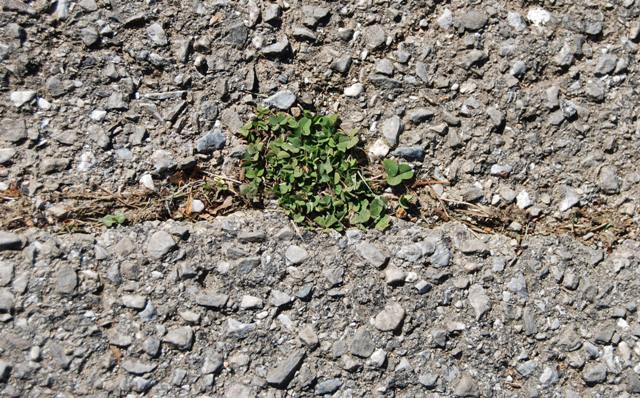
A small patch of invasive clover newly sprouted on the driveway edge.


Same patch the day after spraying with vinegar.


Enough said. But remember – use vinegar carefully because it will kill weeds, but it will also wreck the soil. Stick to places like driveways and sandboxes.

Tuesday, April 17, 2012

My Black Thumb

Just to be sure you aren't under the illusion that my thumb is greener than the next person, I’d like to confess the gardening disasters that have already befallen me (or it might be more appropriate to say the gardening disasters I have already created) this spring. This growing season is shaping up to be my worst ever, unless you include the year I had a sick newborn and planted only potatoes because they would require nothing of me.

The first disaster started back in the fall in our brand new terrace garden. We filled the hillside bed with dirt harvested from our paddock – rich with ten years worth of natural fertilizer.

And then I planted a cover crop of rye grass. The plan (as I understood it from skimming an Organic Gardening article), was that the grass would run its course and die out by spring and then we would knock it down to serve as a natural mulch for our tomatoes. Brilliant! No more purchased mulch, plastic or otherwise, since the last two seasons we’ve gotten the early blight and the late blight. This was to be the year of the tomatoes!

 The grass grew beautifully all winter. The problem is that the northeast has experienced the warmest winter on record (at least my records) and that grass is still growing and growing and is so thick and tall that the kids hide in it for Capture the Flag. Now what? So much for my grand plan.

There is a second part to the tomato disaster. This year I made my own growing medium. I blogged about the beautiful mix I concocted. I started eight different varieties of tomatoes, plus four sweet peppers and four hot peppers in the growing mix.

Wow! The germination rate was through the roof! My growing mix was amazing – every single seed I planted sprouted, plus some appeared to have duplicated themselves because some of the pots had 8 seedlings fighting for light. I patted myself on the back and thinned my seedlings.

A few days later, I noticed there were even more seeds sprouting. The problem was, every single seed that was sprouting was a tomato. Even the peppers. Tomato seedlings have hairy stems – you can’t mistake them for anything but a tomato. How was it all my seeds were tomatoes?

When I checked the buckets of growing mix, yet to be used, there were hundreds of tomatoes sprouting there too. Obviously my compost was full of tomato seeds, and God knows what kind of tomatoes at that. Were they seeds from the organic cherry tomatoes I buy for my oldest to snack on all winter? Were they seeds from the first tomatoes we harvested last year, before we knew we had the blight and happily threw discarded tomato pulp in the compost? Or were they seeds that I had just planted? No way to know.

So here I am with plenty of tomato seedlings, only I’m terrified to plant them for fear of the blight, plus I have no earthly idea what kind of tomatoes they are.

And the disasters just keep coming…..

Since we were having trouble containing the chickens, I decided to sprout my peas before planting them. That bought us a few extra days to secure the chicken fence and clip every wing. The peas were slow to sprout and the day they were ready, I was leaving town for my little brother’s retirement celebration (I’m not that old! He’s an air force pilot who retired after 22 years).

With no time to plant, I thought I would stall them; I put them in the fridge to wait until I got back three days later. I did wonder if this might kill them, but I figured they were peas and the temperature wasn’t freezing so they would survive.

Wrong. Those lovely sprouted peas I planted promptly when I returned produced only 3 viable plants (out of probably 100 seeds). So today I replanted my snap and snow peas and berated myself the entire time.

And the fun continues…
Meanwhile, the lettuce I planted several weeks ago was still not appearing, same for the carrots, spinach, and onions. I figured this was mostly due to my negligent watering habits, but could also be blamed on the fact that the only rain we had in the past two weeks was a huge downpour the day after I planted all those tiny fragile seeds. For a week, I watered diligently. No dice, just a couple onion tips.

Perhaps they washed away. Perhaps they did. When I dug around to add more seeds, I found only a handful of lettuce plants getting started. Ugh. Replanted the lettuce and spinach this morning. The carrots are on their own. I never have good luck with them anyway and I’m going to assume the onion bulbs will get going once the gardener gets her act together and starts watering on a regular basis.

This would all be very depressing, except the great thing about gardening is that seeds are cheap. You can always try again tomorrow. In digging up the OG article that led me to plant the grass, I discovered that you can just knock down or mow the rye grass. I tried tromping it down, but it just bounced right back. I’m thinking we might have to use a scythe, that’ll be fun, won’t it honey?

And the tomatoes. I pulled out everything from eight of the starter pots and put fresh seeds in them, figuring all the volunteers who were going to volunteer had already done so. I’ll use my eight new plants as templates to decipher what is growing in all the other pots.

This is the goal. Someday.
I hope your gardening season is off to a better start than mine. I’ll let you know how the story ends.

NOTE: I'LL BE PRESENTING A WORKSHOP ENTITLED "CLEAN AND GREEN LIVING" AT THE MASON DIXON LIBRARY WEDNESDAY APRIL 18 AT 6:30 PM. WOULD LOVE TO SEE YOU THERE.

Tuesday, April 10, 2012

Chicken Keeping, Anyone?

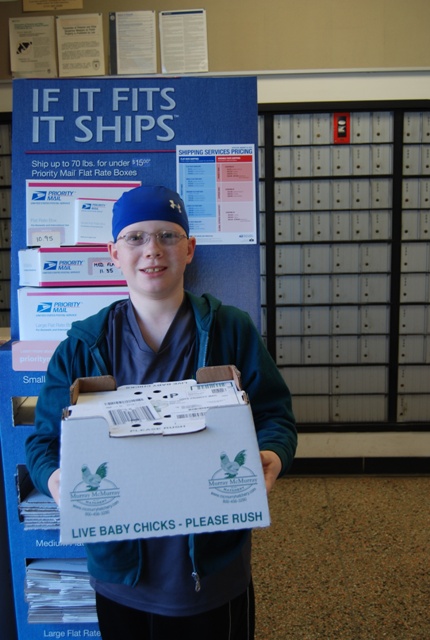
The babies are here! Last Monday at 7am, the post office called to say our chicks had arrived! My youngest son and I quickly scrambled and got out the door. As soon as we opened the door to the post office we could hear the peeping. The postal worker handed us a small box crammed with 28 baby chicks (see pic). They were only a day old.

Now, I certainly don’t need 28 chicks. We have 10 laying hens. We like to have about 18 hens – that’s the  magic number to provide us and our neighbor-customers with eggs, and still leaves a few left over to give as gifts. Several of our older hens are not laying so much and some weeks we barely have enough eggs for us. Still, we don’t need 28 chicks.

Problem is, when you order chicks through the mail, the minimum order is 25 chicks. I’m guessing this is the baseline of body mass to ensure survival. When you cram 25 newborn chicks into a shoebox, they keep each other warm. Two of the extras happened because of the lengthy e-chat I had with a nice man at the hatchery in Iowa. He threw them in because I filled up an afternoon with my questions. Guess there's not much excitement at a hatchery in Iowa in the middle of February. The bonus chick was a surprise. “Look mom – they gave us an extra chick!” The identity and sex of the extra chicks is a mystery that will unfold this spring, but so help me, if that nice man gave me any roosters – it’ll be the last e-chat we ever have!

We brought the chicks home and set them up in a box in the garage with heat lamps, food, and water. It is very distracting, and in fact this post is late and of no practical use because of my frequent visits to the little darlings in the garage. They only stay cute for a very short while and then they become large, noisy, garden-wrecking mobs that make me crazy-mad, but in a good way.

Have you ever thought of keeping your own chickens? Here are some good reasons –

  1. They are excellent for pest control, eating the grubs and larvae all year long that would have become bothersome insects like Japanese beetles. Ticks are one of their very favorite delicacies. We’ve discovered that they also love stink bugs! We gather up the ones in the house with a shop vac and then empty the bag into the chicken pen. You should see those hens line up when they see my husband coming with the shop vac! I tell you if chickens could fly they would take care of our stink bug problem!
  2. A young laying hen will produce nearly one egg a day for you! As they get older, their laying slows, but you’ll still get plenty of eggs for nearly five years from a single hen! If you’ve never had fresh eggs – you may not be appreciating this fact as much as you should. There is a BIG taste difference between a fresh egg and one from the store (which is most likely a month or more old)
  3. Chickens make great pets. Really. They each have a personality. They provide endless hours of entertainment. If you handle them plenty when they are little, you can continue to handle them when they are older. My daughter has walked two of our chickens in parades (on a leash!). They become very attached to the person who feeds them (that would mostly be me). When I am outside, they follow me around as I do my chores. It always puts a smile on my face when I turn around to see 30 chickens racing down the hill after me.
  4. Chickens will eat all your table scraps. We stay away from meat, though, because we want to keep our girls vegetarians. They don’t like tropical fruit, but just about anything else, they’ll gobble up.
Here’s the answers to the most common protests that arise from reluctant spouses when you propose getting chickens:

  1. They’re noisy. Actually, no, they aren’t, unless you get a rooster and then, well, it’s a nice farmyard sound. You don’t need a rooster, though. Like most females they produce eggs, whether there’s anyone around to fertilize them or not. Our eggs are fertilized thanks to all the hanky panky going on in our yard, but roosters aren’t necessary to produce eggs. Occasionally a hen will make an announcement when she’s laid an egg she’s particularly proud of, but the noise isn’t any louder than your kids or dogs playing in the yard.
  2. They’re dirty. Unless your chicken yard is muddy (as ours can be), they’re actually pretty clean animals. Of course, after handling them you’ll want to wash your hands, just like you would after handling your cat or dog.
  3. They’re a lot of work. Really, there’s very little work, much less than there is with a cat or dog (or rodent in a smelly cage). You don’t have to clean up after them, except to sweep out the roosting house now and again and they put themselves to bed each night. Chicken waterers and feeders usually hold a few days worth of feed, so you don’t even need a petsitter when you go away.
  4. Our neighborhood/town/county won’t let us have them. This isn’t always the case. I know lots of people who keep them in their backyards in very swanky neighborhoods. As mentioned above, they aren’t noisy or messy, so most people won’t even know you have them. Check with the powers that be, though, before launching this endeavor.
  5. They’re expensive. Not really. Expense is relative. All you need to keep a few chickens is an enclosure like a dog kennel and a box/cabinet of some kind for them to roost in. My husband built ours mostly out of scrap lumber. We built a separate laying house because we have so many, but it’s not necessary. Baby peeps are inexpensive - $2-$4 each depending on the breed. A 50lb bag of chicken feed feeds my girls for nearly a month for about $13, so figure you’ll spend a lot less on yours, especially if you supplement with table scraps, stale cereal, and leftover lunch crusts.
Hope this inspires you to consider keeping a few chickens yourself. If your living arrangement won’t allow, maybe you have a friend or relative who would go in on it with you. There are so many rewards in chicken keeping – amazing eggs, stellar fertilizer (chicken poop is premium fertilizer for your gardens), endless entertainment, and surprising life lessons about society, animal instincts, responsibility, and the pecking order.

Here are a few resources to get you started:

Backyard Chickens
McMurray Hatchery

Past posts:
I’d write more, but I’m missing so much action out there in the peeps’ pen, so I gotta go. They grow up so fast. Only a week old and they’re already sprouting feathers on their wings!