Thursday, May 29, 2014

The Teepee is Ready to Go!

The teepee is up! I know you were not aware of my Native American roots, but that’s only because I have none. The teepee is for my beans. It’s always the most impressive feature in my garden, causing people to ooo and awe over my gardening prowess. But really, it’s no big deal. You can build one, too.

The teepee costs nothing and can be assembled in a half hour or less, depending on your available resources. All you need is a few sticks – three long, three medium – and a bunch of twine. Baling twine, which is littered in most every nook and crevice of my barn, works best. After this winter, sticks are everywhere. If you haven’t got a pile in the back of your yard, stop by a park, woods, etc., and grab a few off the ground. I promise no one will mind. If you’re local and need sticks – c’mon over. We picked up fifteen pick-up truck loads of fallen branches after this winter’s ice storm. (You can grab some free baling twine while you’re here.)
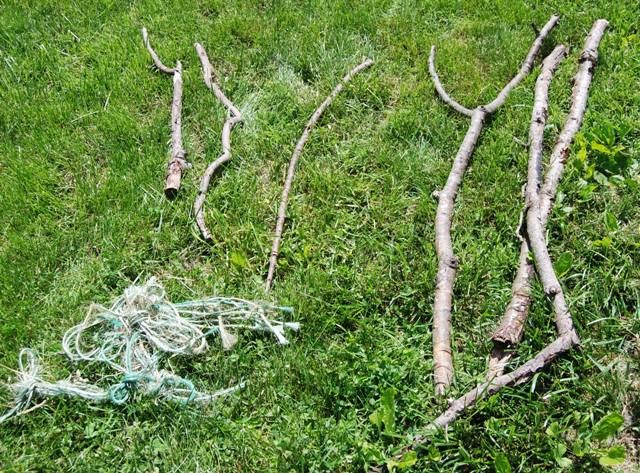
Once you have your sticks and twine assembled, choose a relatively level spot that gets plenty of sun.

Wednesday, May 21, 2014

Bring on the Fat! (Really!)


When my youngest son was first diagnosed with alopecia areata, we desperately sought answers. All the traditional doctors at the esteemed hospitals told us there was nothing we could do. I refused to believe that and sought alternative treatments. This led us to a doc in Lancaster who practiced what I’ll call ‘wellness medicine.’ He doesn’t have a sign and he isn’t in the book, but through combing the internet, autoimmune message boards, and facebook, we found him.

We waited nearly six months for our appointment. It was pouring rain on the day that Ian and I set out for his office. We found it deep in the heart of the city of Lancaster in a basement of an unmarked old house. I was anxious, but committed to seeing it through so we waited in a damp, dimly lit room for over thirty minutes. The only literature available to read consisted of hippie newsletters full of information on making your own kefir, recipes for bulgur (what?), CSA’s, organic farms, and endless rants against the corrupt food system controlled by our even more corrupt government.

When the doctor appeared, he was a friendly bear of a man and Ian took to him immediately. He talked to us extensively about what Ian currently ate, looked in his mouth, felt his glands, scraped his skin, and took a saliva test. Then he overwhelmed my mind with his talk about how upside down our government’s nutritional standards are. He said Ian needed more animal fats and salt in his diet. He prescribed homeopathic remedies like butter capsules and vitamins he had specifically developed for kids in today’s American food culture. While Ian munched on a piece of beef jerky from the jar on his desk, I frantically wrote down everything he said about raw milk, grass-fed meat, full-fat cheeses, and bacon grease.

Thursday, May 8, 2014

Sugar Addict

Is sugar addictive? Scientists and dieticians have debated this question, but most of us know the truth. Indeed it is. Powerfully so. The National Institutes of Health quietly agrees also, although they didn’t take out an ad on the front page of the New York Times to announce it.

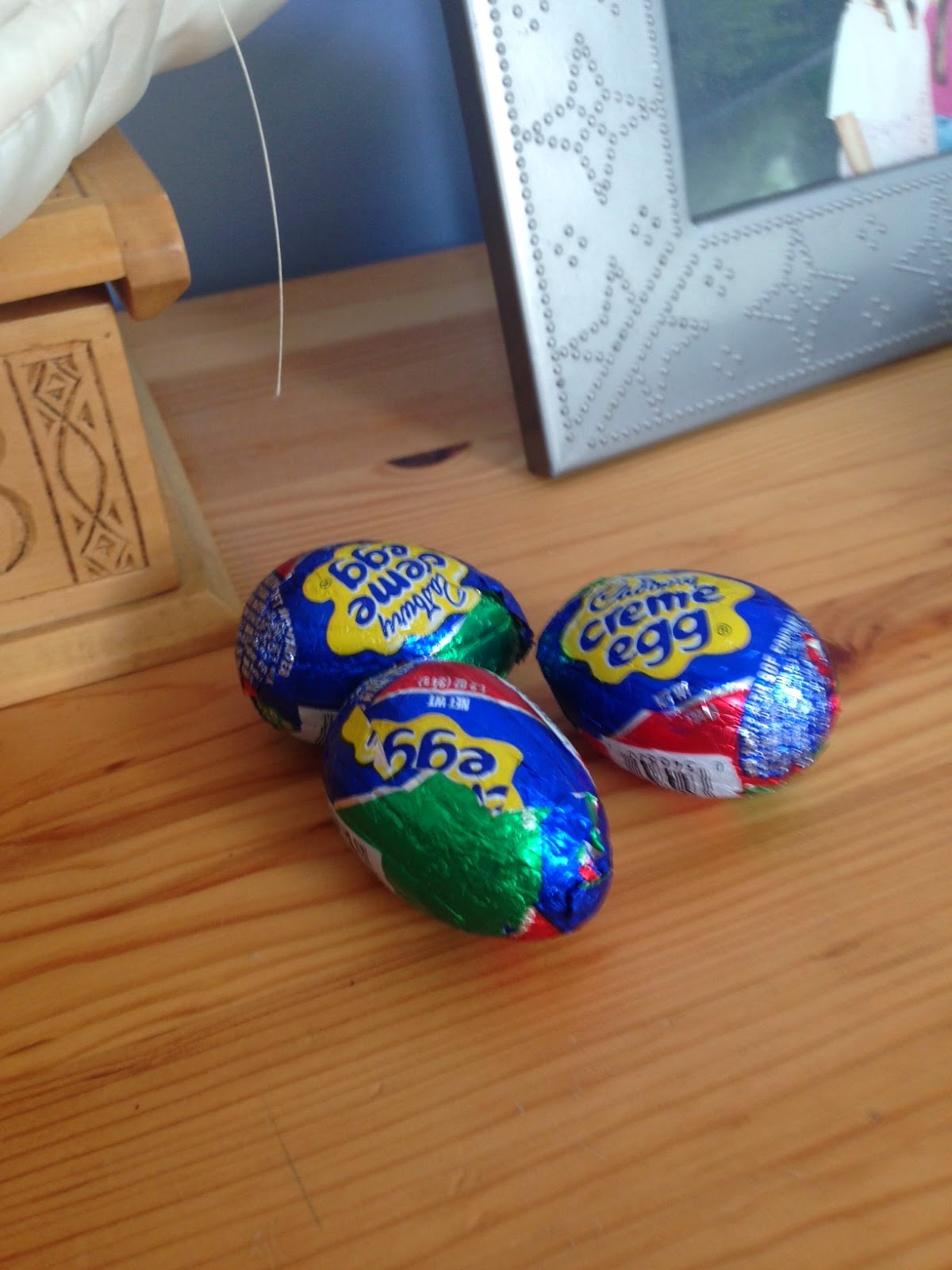
Here’s what I know – If I eat one handful of M&M’s, I’m going to want another handful so badly that I’ll steal it out of my kid’s Halloween stash if I have to.  But when I stop eating white sugar for longer than a few days, I no longer crave it. There have been three Cadbury crème eggs (my biggest weakness in terms of hideously-bad-for-you-but-OMG-deliciousness) sitting on the top of my dresser since Easter morning. Usually my hubby is much trickier in hiding my eggs, but he had just returned that morning at 1am from a week of digging foundations by hand in rural Honduras in 100 degree heat. Instead of finding my Cadbury eggs in my sock drawer or inside my pillowcase, they were unceremoniously dumped on top of my dresser, Happy Easter. I think he gets points for even managing to produce them in light of his previous week. At any rate, those eggs are still sitting there over two weeks later. I haven’t even touched them because I know that the moment I do, I’ll eat all three. I stare at them every day, but don’t remove them. It’s like the cigarette in Augustus’ mouth in The Fault in Our Stars – I look at the killing thing every day to gain power over it.

Breaking the sugar habit is tough for all of us. Nearly everything edible you buy has added sugar. Check out any bread, yogurt, condiment, cracker, spaghetti sauce, prepared food, even hot dogs – high fructuous corn syrup or sugar is an added ingredient. It’s very difficult to avoid sugar.

Wednesday, April 30, 2014

Put It All on the Line (Literally)

Monday morning on my run, I noticed a new clothesline at a neighbor’s house. It’s one of those single pole types with multiple rows of lines filling a metal frame. Shirts on hangers hung neatly from each row and waved in the breeze. I didn’t stop to be certain, but my casual in-flight count was 24 shirts! That’s a lot for such a small set up.

At our house we have a single line with pulleys on both ends. One pulley is attached to a pole on our deck and the other is atop a long metal pole secured in the ground with cement. Because our line runs down hill, the pole is extra tall.

It’s surprising to me that more of my neighbor’s don’t utilize a clothesline. A dryer is one of the biggest energy hogs in the house. Our electric bill goes down by half in the summer thanks to solar powered hot water and the clothesline. I resisted the line for too many years thinking it would be too time consuming, too labor-intensive, too ugly.

Now when I drive up my driveway and see the clothes blowing in the breeze, it makes me smile. And I look forward to the five minutes I spend each morning hanging clothes out. It’s my time to listen to the birds, take in the sunshine, and be left alone. No one ever offers to help hang out the laundry (except my father-in-law’s wife who understands the sacred space created by clotheslines).

Wednesday, April 23, 2014

Lovely Unnecessary Lawns

I’ve been thinking a lot about grass. My horses also (presumably) think a lot about it. They’re disappointed so far this year because our pasture grass has not truly begun to grow yet. Another frost this morning is just adding to our very late, very cold spring. I stand at the fence and study the grass and worry about it. The grass is the main food source for my critters all summer. Our winter hay ran out early because we had two solid months of snow-covered ground. My hay guy and neighbor keeps bringing me what he can, but it is increasingly less attractive as he digs deep into the recesses of his barn for hay baled nearly a year ago. I toss out a few flakes and the horses sniff it before walking up the hill in search of better food, only to return soon after to pick through the hay. When you’re hungry you’ll eat almost anything.

My husband and two of my kids returned late Saturday night (actually early Sunday morning) from a work project in Honduras. They were helping to build homes for the homeless in a remote village in the mountains where prosperity is judged by whether or not you have any chickens. I asked my son how the food was during their 9 day stay and he said, “I’ve learned to be a lot less picky about my food.”

The horses are figuring this out too while we wait for the grass to grow. I sent a soil sample off to Penn State for analysis and found out that my pasture soil has a perfect ph, plenty of nitrogen, but is low in phosphorus.  This will require a custom blend of fertilizer which is probably more money than I’m willing to throw at this problem. This led to some research on fertilizers.

Did you know that Americans use 90 million pounds of fertilizers and 78 million pounds of pesticides on their lawns each year? And nobody is even depending on that grass for survival. In light of the stories and pictures from my kids’ experience in Honduras, that seems grossly excessive. Those fertilizers do make the grass bright green, but they also contaminate rivers and streams and eventually drinking water. There is a creek at the bottom of my hill and every time it rains we watch as a steady torrent of water runs from our pasture, down our driveway, across the road to the stream below. If I were to apply the fertilizer I’m considering, how much of it would land in Deer Creek? And is it really worth it?

Wednesday, April 16, 2014

What's Hiding in Those Eggs?

Easter is only a few days away. In previous years, I’d be prepared. This year, despite its late date, it snuck up on me. Considering there was snow falling from the sky last night (enough, already!), it’s been hard to get in the mood. Yesterday, and again this morning, my youngest, most subtle child, said, “I hope the Easter bunny’s figured out what he’s going to put in the eggs this year.” This child knows me. He’s also a snooper and has probably noticed the lack of stashed treats.

It’s hard to bring myself to buy crappy candy. Yes, I know, this is what Easter’s all about. Candy is part of the deal. Still, it grates on my soul. Tomorrow I will drag myself up to the Wolfgang Candy outlet in York and buy the obligatory sweet stuff. At least I’ll be supporting a local company.

One year, when I was more ambitious, I actually made organic homemade chocolate covered cream eggs. Who was that woman and where did she go?

Every year I try to think of other things to stuff the plastic eggs with beyond sugar drenched, food-dye laden, artificially flavored lumps (because really people, that’s what this is).

Now, don’t take me for a scrooge. I’m all about Easter. I love watching the kids hunt for eggs. I love surprising them with a few nice things in their Easter baskets. I just wish I had something better to offer them in their eggs.

My older kids are always looking for a handout, so money is an obvious option. I’ll fill a few eggs with cold hard cash. But what else fits in that tiny egg? I turned to the internet for ideas.